 Image 1 of 4
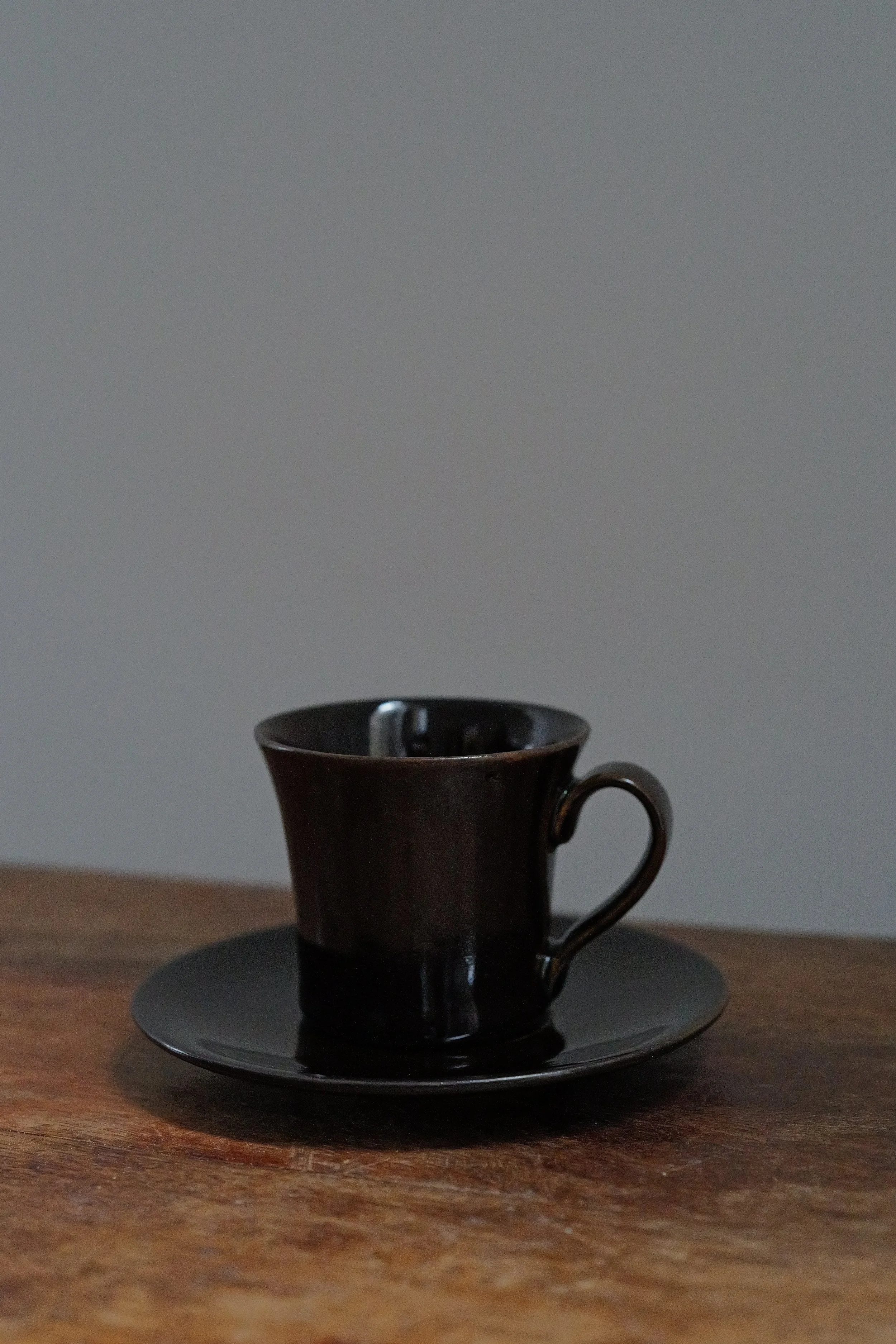 Image 2 of 4
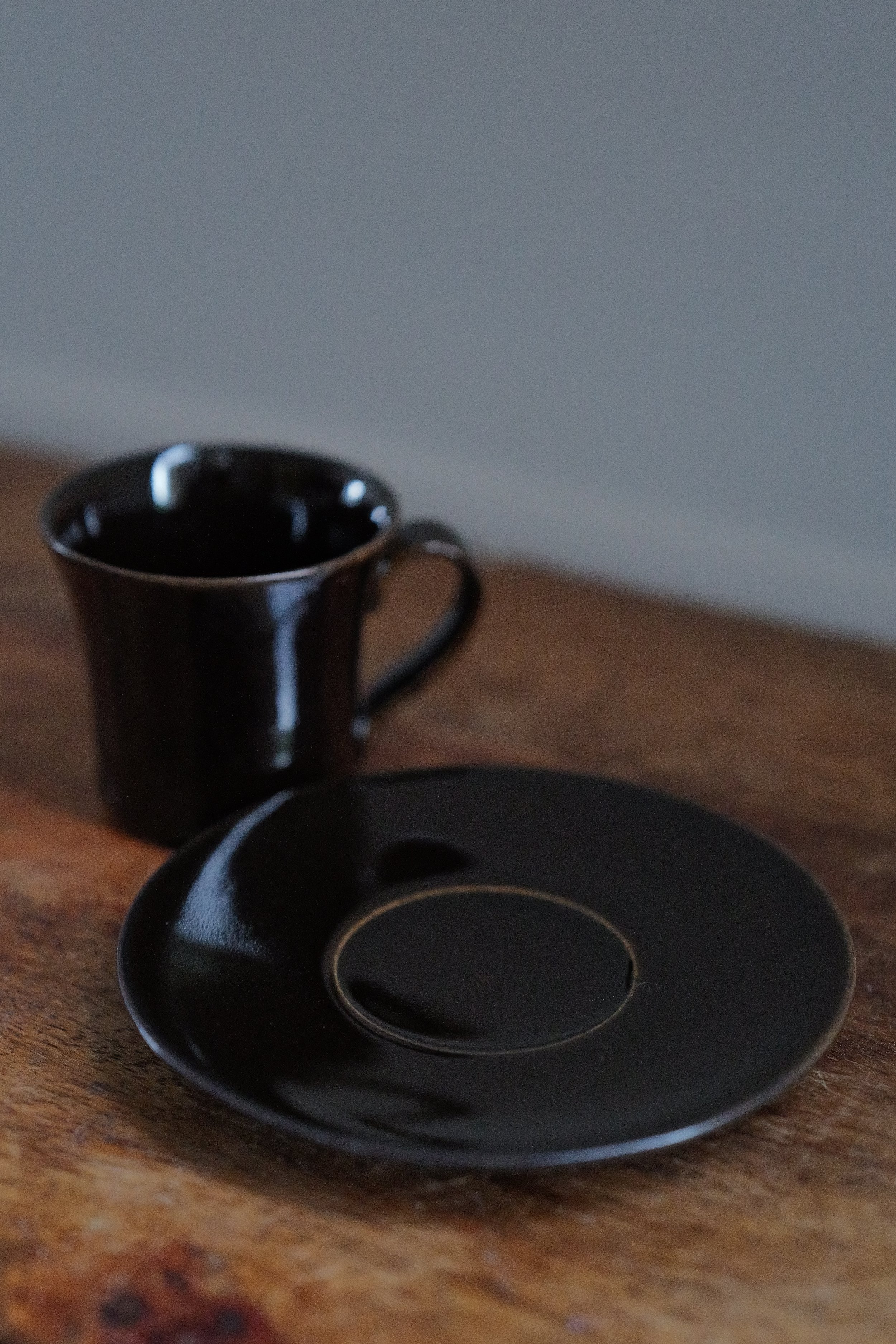 Image 3 of 4
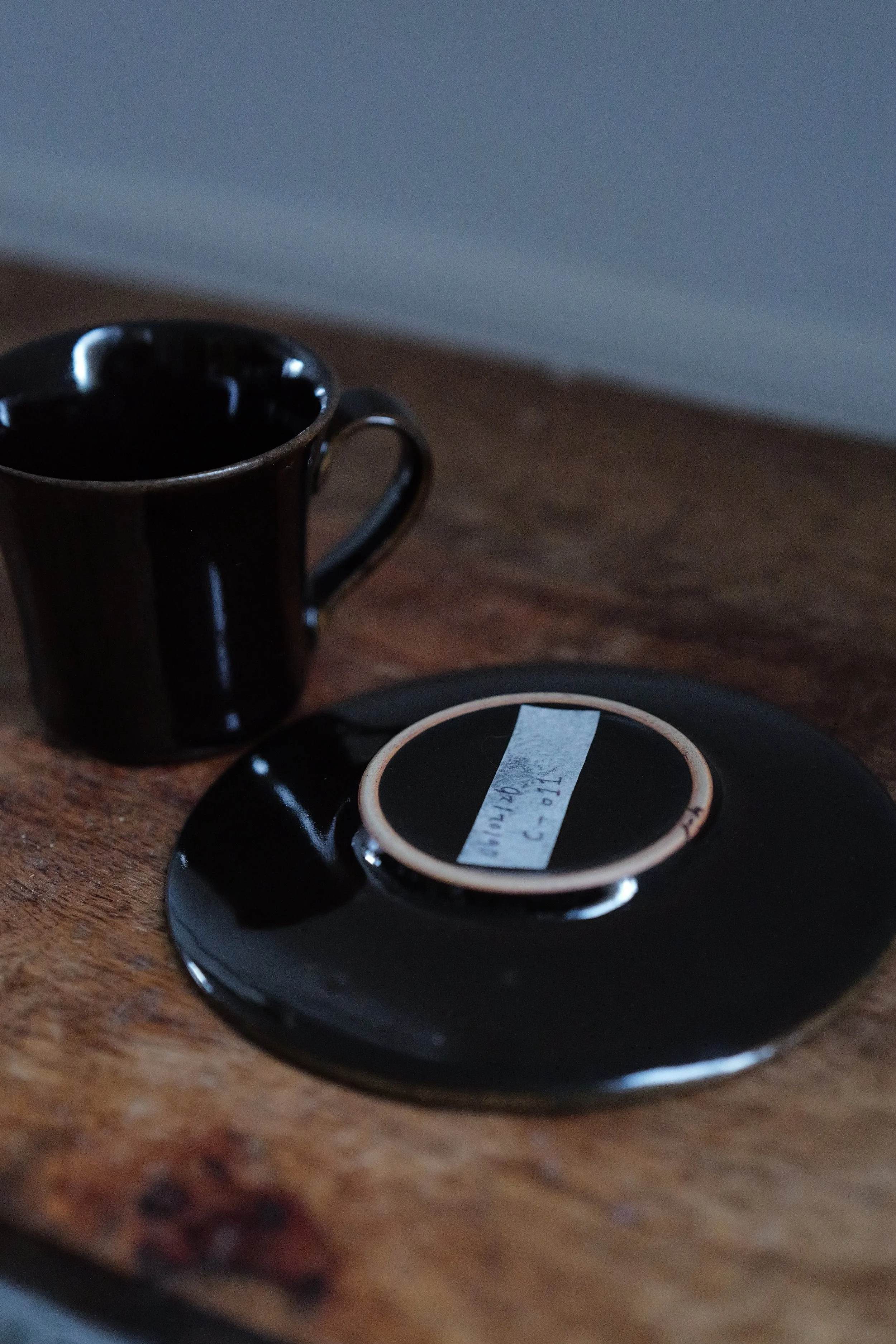 Image 4 of 4
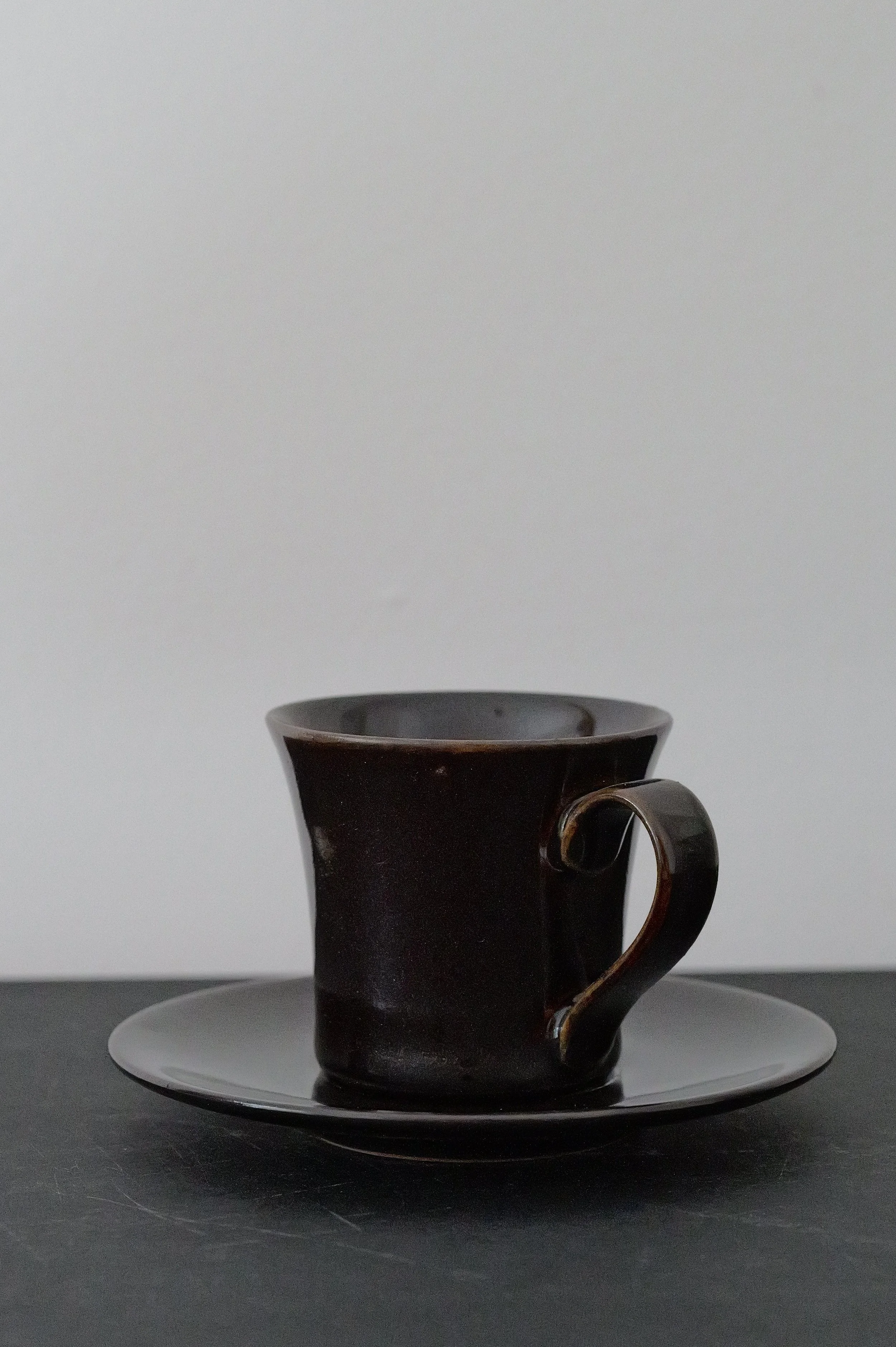
Material - Stoneware with shiny Tenmoku glaze
/
Dimension
75ml
Cup: 6.5x6x7.5
Saucer: 1.5x11x11
/
Description
I developed my own Tenmoku glaze — glossy like a mirror, an unfathomable black that breaks into warm brown at the sharp edges of the clay. Its subtle color shifts reveal themselves only when you hold the bowl up and peer past the glare, like catching the last light leaking from a sinking sun. I’m utterly captivated by it. Though because of that same reflective surface, I’ve never quite managed to capture its true essence in a photograph.
/
Story
Tenmoku glaze — perhaps the most renowned Chinese glaze overseas, second only to blue-and-white porcelain.
Tenmoku takes its name from Tianmu Mountain,where Japanese monks studied Buddhism at during Song Dynasty (AD960-1279), and brought black tea bowls back to Japan, naming them after the place where they first encountered them.
Tianmu Mountain is located in Zhejiang Province — my home. Zhejiang has long been known for producing green tea. In the Southern Song era (AD1127-1279), tea was ground into powder and whisked with hot water, similar to how matcha is prepared in Japan today. As the region was once the political and economic center of the country, tea competitions flourished, and black-glazed bowls became favored for the way they revealed the contrast of white tea foam. Today, people in Zhejiang still drink green tea, but by steeping rather than whisking.
/
Care
All works are food-safe. While they are technically dishwasher-safe, hand-washing is highly recommended. As handmade ceramics are inherently more unique and less uniform than mass-produced items, please handle them with gentle care to avoid chipping the edges.
Material - Stoneware with shiny Tenmoku glaze
/
Dimension
75ml
Cup: 6.5x6x7.5
Saucer: 1.5x11x11
/
Description
I developed my own Tenmoku glaze — glossy like a mirror, an unfathomable black that breaks into warm brown at the sharp edges of the clay. Its subtle color shifts reveal themselves only when you hold the bowl up and peer past the glare, like catching the last light leaking from a sinking sun. I’m utterly captivated by it. Though because of that same reflective surface, I’ve never quite managed to capture its true essence in a photograph.
/
Story
Tenmoku glaze — perhaps the most renowned Chinese glaze overseas, second only to blue-and-white porcelain.
Tenmoku takes its name from Tianmu Mountain,where Japanese monks studied Buddhism at during Song Dynasty (AD960-1279), and brought black tea bowls back to Japan, naming them after the place where they first encountered them.
Tianmu Mountain is located in Zhejiang Province — my home. Zhejiang has long been known for producing green tea. In the Southern Song era (AD1127-1279), tea was ground into powder and whisked with hot water, similar to how matcha is prepared in Japan today. As the region was once the political and economic center of the country, tea competitions flourished, and black-glazed bowls became favored for the way they revealed the contrast of white tea foam. Today, people in Zhejiang still drink green tea, but by steeping rather than whisking.
/
Care
All works are food-safe. While they are technically dishwasher-safe, hand-washing is highly recommended. As handmade ceramics are inherently more unique and less uniform than mass-produced items, please handle them with gentle care to avoid chipping the edges.